

After 40, your body change.
If you’re injured, recovery slows.
You’ll notice muscle declines.
And you wonder why fat gain seems accelerated.
Here’s the fact.
You’re at that age where you cannot out-train poor nutrition anymore.
Here are 3 rules that matter for you.
Everything else is noise.
1. Protein First. Every Meal. No Exceptions.
You lose 3–8% of muscle mass per decade after 30.
The decline accelerates after 40.
When you lose muscles, your metabolic rate drops and you have increases fat regain risk.
If your protein intake is low, your body pulls amino acids from muscle tissue.
That is non-negotiable biology.
What To Do ?
Hit 30g of high-quality protein per main meal.
Not 10g. Not “some.” Thirty grams.
Examples:
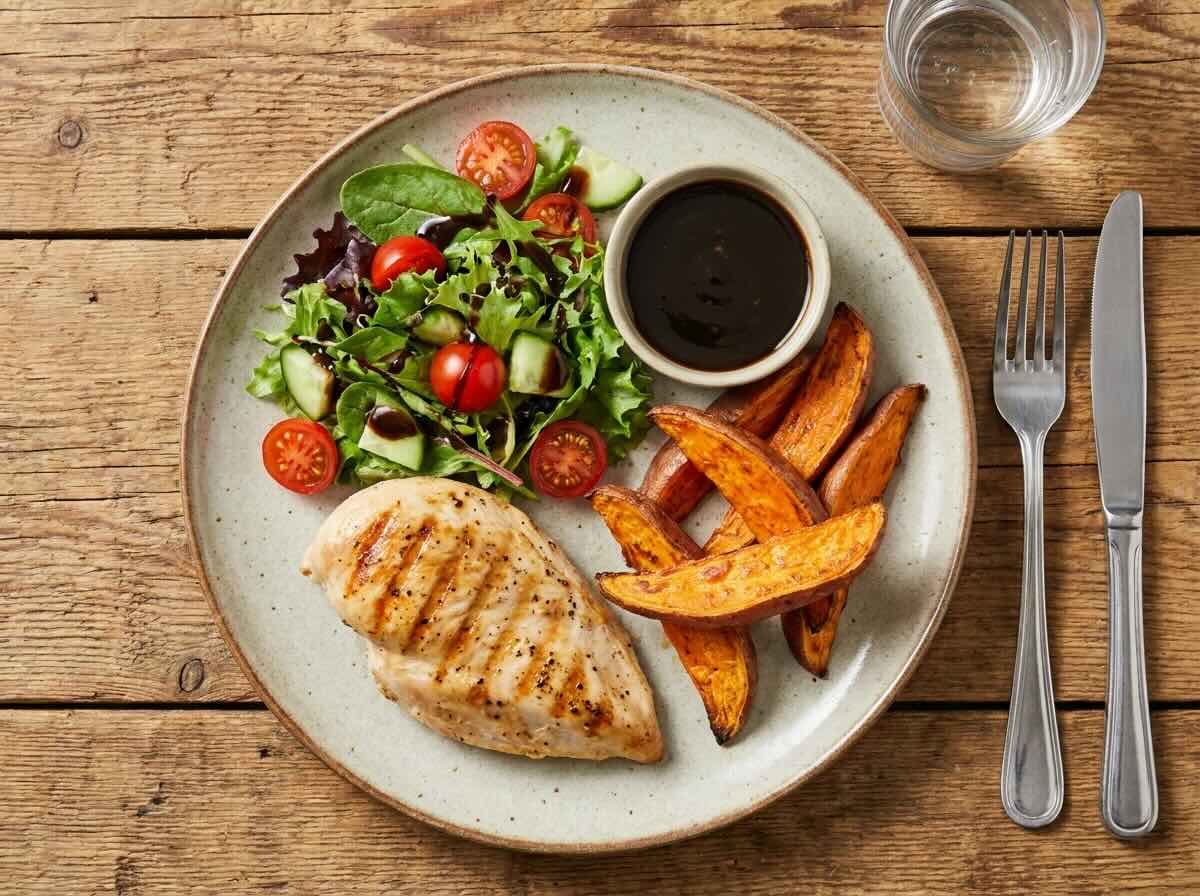
- One large chicken breast
- 4–5 eggs
- 200g Greek yogurt + whey
Research in The Journal of Nutrition shows older adults require ~30g of high-quality protein per meal to maximally stimulate muscle protein synthesis.
Eat protein first.
Before rice. Before bread. Before fats.
Protein increases satiety and reduces total calorie intake.
Make dinner protein-heavy.
Muscle repair peaks during sleep.
Under-eat protein at night and you waste that window.
If you miss protein targets, you are choosing muscle loss.
2. Fiber Is Your Metabolic Insurance

Your digestion slows with age.
On top of that, your blood sugar control weakens.
Hennce, your cardiometabolic risk increases.
But fiber directly improves all three.
Low fiber after 40 is strategic negligence.
What To Do ?
Add two handfuls of fibrous vegetables to every main meal.
Spinach. Broccoli. Asparagus. Greens.
No vegetables = incomplete meal.
Pair your fiber with water.
Make sure to get least 8 oz per high-fiber intake.
Because fiber without hydration actually worsens constipation.
Make your carbs earn their place.
80% of carb intake should come from:
- Berries
- Beans
- Lentils
- Whole vegetables
Definitely not refined flour. And certainly not sugar.
A major meta-analysis in The Lancet found high fiber intake significantly reduces risk of heart disease and Type 2 diabetes — both sharply elevated after 40.
In short, getting enough fiber is not about your digestion comfort.
But it is about disease prevention.
3. Use 80/20 or Burn Out

When you diet rigidly, you’ll fail long-term.
Since total restriction only increases stress and rebound overeating.
On top of that, stress hormones promote abdominal fat storage.
In short, the smartest dieters use structure and not psychological collapse.
What To Do ?
The Clean 80
make sure at least 80% of your meals from whole foods:
- Lean protein
- Vegetables
- High-fiber carbs
- Healthy fats
Operationalize it:
Your target is 17 out of 21 your weekly meals are clean.
The Controlled 20
But aim to be 20% flexible.
We are talking about social meals. Desserts. Pizza.
But make sure they are planned — not impulsive.
Pre-Load Protein Before Indulgence.
And keep in mind to eat lean protein 20 minutes before a higher-carb meal.
This reduces appetite and blunts post-meal glucose spikes.
Research in the Journal of Obesity associates flexible dieting approaches with better long-term adherence and less overeating than rigid restriction.
Consistency beats intensity.
Bottom Line
When you are already reaching 40 or above, remember :
- Your protein will preserve your muscle.
- Your fiber will protects metabolism.
- And thinking 80/20 will make sure your adherence.
Ignore these and fat gain becomes easier every year.
Execute them and you stay lean, strong, and metabolically resilient.
No hacks.
No detoxes.
No trends.
Just physiology applied correctly.

